
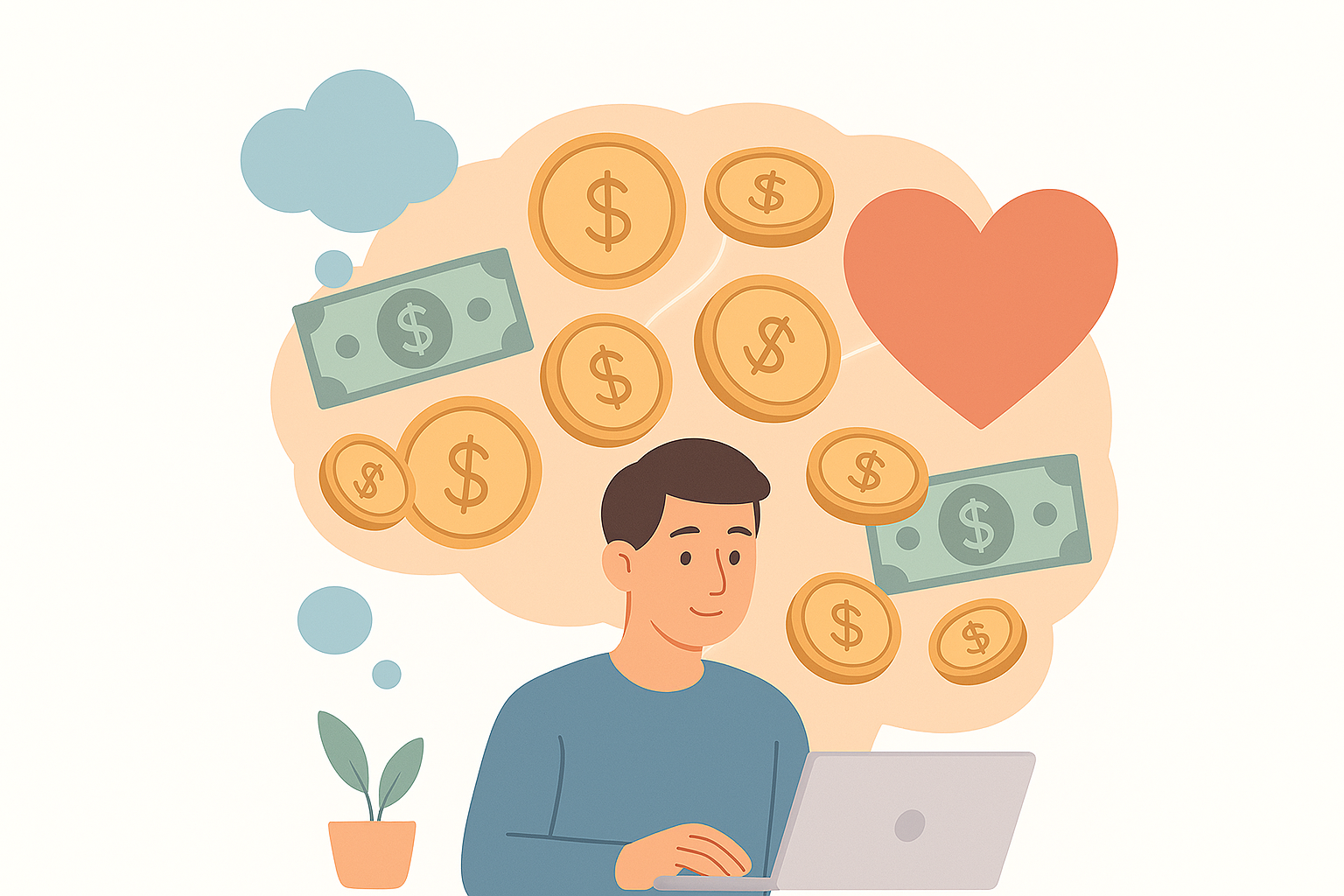
Despite the pervasiveness of money in our lives, few of us receive instruction on how to manage it. We learn how to earn, save, and spend money, but we rarely stop to consider the rationale behind our spending habits, particularly when it comes to irrational choices. Here is when it becomes really crucial to comprehend the ways in which money impacts people.
Learning how your feelings, habits, and beliefs affect how you handle money can radically transform the way you do it. This essay is a beginner-friendly, instructive primer on financial psychology that is directed at young adults, those who spend too much money when they are upset, and anyone who wants to have a healthier relationship with money.
What Is the Psychology of Money?
The field known as “the psychology of money” investigates the ways in which individuals’ biases, assumptions, and worldviews impact their monetary decisions. This area of study recognizes a basic reality that conventional finance, which takes for granted that people are rational and analytical, fails to acknowledge.
Humans are emotional first, logical second.
Fear, want, cultural pressure, childhood experiences, and mental shortcuts all affect how we spend our money. Because of this, it’s possible for two individuals to have completely different outcomes when given the same amount of money.
Researchers in the area of behavioral finance try to pin down the mental processes that lead individuals to put their own financial interests last.
Understanding Your Money Mindset
Your money mindset is the way you think and feel about money. It often starts while you’re young.
Where Does Money Mindset Come From?
- Family attitudes toward money
- Childhood experiences (scarcity or riches)
- Cultural and social norms
- Past financial achievements or failures
For example:
- If you grew up hearing “money is hard to earn,” you may fear spending—even when you can afford it.
- If money was used as a reward, you may link spending with happiness.
Common Money Mindset Types
- Scarcity Mindset – Constant anxiety of running out of money
- Abundance Mindset – Belief that money may develop with planning
- Avoidance Mindset – Ignoring funds due to worry
- Status Mindset – Spending to impress others
Your thinking secretly affects your decisions more than income or intelligence ever will.
How Emotions Affect Money Decisions
One of the major reasons folks suffer financially is emotional spending—using money to regulate moods instead of addressing true necessities.
Emotions That Drive Financial Behavior
1. Fear
- Panic selling investments
- Avoiding financial planning
- Hoarding cash unnecessarily
- Greed
- Chasing fast profits
- Overtrading
- Falling for scams
- Guilt
- Overspending on others
- Avoiding self-care expenditure
- Donating over your boundaries
- Happiness & Excitement
- Impulse purchases
- Lifestyle inflation
- “I deserve this” spending
Understanding how emotions impact money decisions lets you pause before acting—and that pause is powerful.
Emotional Spending: Why We Buy What We Don’t Need
Emotional spending comes when purchases are made to cope with feelings rather than to address actual necessities.
Common Emotional Spending Triggers
- Stress after work
- Loneliness or boredom
- Social comparison (especially on social media)
- Celebrations or bad days
Example: You’re not buying new shoes—you’re buying escape from stress.
Signs You’re an Emotional Spender
- Regret after purchasing
- Shopping when frightened or upset
- Hiding purchases from others
- Feeling momentary bliss, then remorse
This behavior isn’t a personal failure—it’s a psychological predisposition that can be modified.
Behavioral Finance: Why Smart People Make Bad Money Choices
Behavioral finance describes probable mistakes humans make owing to mental shortcuts termed cognitive biases.
Key Biases That Affect Your Money
Loss Aversion
We fear losses more than we cherish successes. This can stop us from investing or induce panic selling.
Confirmation Bias
We seek knowledge that reinforces what we already think, ignoring warning flags.
Present Bias
We value short-term pleasure over long-term gains (spending now instead of investing).
Herd Mentality
We follow what others are doing—even if it doesn’t make sense for us.
These biases explain why knowledge alone doesn’t lead to prudent financial activity.
Financial Psychology vs Financial Knowledge
Many people know what they should do with money:
- Save more
- Spend less
- Invest regularly
But knowing isn’t action.
Why Knowledge Isn’t Enough
- Emotions overcome logic
- Habits are stronger than intentions
- Stress decreases self-control
That’s why developing your financial thinking frequently counts more than learning new financial techniques.
How to Build a Healthy Relationship With Money
- Increase Emotional Awareness
Before spending, ask:
- “What am I feeling right now?”
- “Will this purchase still matter tomorrow?”
Name the emotion—this alone lowers impulsive behavior.
- Create Emotional Buffers
Instead of eliminating spending altogether, shift it:
- Stress → Walk, notebook, music
- Boredom → Learning a new skill
- Sadness ⇒ Talk to someone
Money shouldn’t be your principal emotional weapon.
- Automate Good Decisions
Automation decreases emotions:
- Automatic savings
- Scheduled investments
- Bill auto-pay
Less decision-making implies fewer emotional errors.
- Redefine Success
Financial success isn’t:
- Luxury items
- Social approval
- Copying others
Real success is:
- Peace of mind
- Flexibility
- Control over your time
This mentality modification alters spending patterns automatically.
How to Improve Your Money Mindset Step by Step
Step 1: Track Without Judging
Track expenses without shame. Data is information—not morality.
Step 2: Identify Patterns
Notice emotional triggers behind spending.
Step 3: Replace, Don’t Restrict
Replace destructive behaviors with supporting ones instead of extreme budgeting.
Step 4: Practice Delayed Gratification
Wait 24–48 hours before non-essential purchases.
Step 5: Align Money With Values
Spend intentionally on what genuinely matters to you.
Why Young Adults Struggle Most With Financial Psychology
Young adults face:
- Irregular income
- Social pressure
- Easy digital spending
- Limited financial education
Apps, ads, and “buy now, pay later” systems are geared to exploit emotional behavior.
Understanding the psychology of money early spares you from decades of unneeded sorrow.
The Long-Term Impact of Emotional Money Habits
Unchecked emotional expenditure can lead to:
- Chronic debt
- Anxiety and shame
- Relationship conflicts
- Delayed life goals
On the other hand, emotional awareness leads to:
- Consistent saving
- Better investment behavior
- Higher life satisfaction
Money itself doesn’t cause happiness—but how you connect to money greatly affects your well-being.
Final Thoughts: Master Your Mind, Not Just Your Money
The biggest financial battles are not in spreadsheets—they’re in the mind.
When you understand:
- Your money mindset
- Your emotional triggers
- The role of behavioral finance
You stop battling money and start working with it.
Wealth is not merely about how much you earn—but how wisely you think, feel, and act around money.
If you desire long-term financial peace, start with financial psychology. Everything else follows.
Hi, this is a comment.
To get started with moderating, editing, and deleting comments, please visit the Comments screen in the dashboard.
Commenter avatars come from Gravatar.