
Introduction: Celebrating Eid with Joy, Not Financial Stress
Eid is one of the most beautiful celebrations in the Muslim world. After thirty days of fasting, spiritual reflection, patience, and self-discipline during Ramadan, Eid arrives as a moment of reward, gratitude, and happiness. Families gather together, children wait excitedly for Eidi, homes are decorated with lights and laughter, and tables are filled with delicious food.
But alongside the joy, many people quietly experience something else: financial pressure.
Buying new clothes, preparing festive meals, purchasing gifts, traveling to visit relatives, and giving charity can quickly become expensive. For many families, the weeks leading up to Eid involve increasing expenses and difficult financial decisions.
Without proper planning, what should be a joyful celebration can sometimes result in post-Eid financial stress, debt, or depleted savings.
This is where the concept of “Budgeting for Barakah” becomes powerful.
In Islam, the word Barakah refers to blessings, abundance, and goodness that comes from Allah. It represents the idea that when we spend with sincerity, balance, and gratitude, our wealth carries more value and benefit.
Budgeting for Eid does not mean reducing happiness or limiting celebrations. Instead, it means planning wisely so that generosity, joy, and financial stability can coexist.
When Eid spending is guided by thoughtful planning and spiritual awareness, every expense becomes meaningful. Gifts strengthen relationships, charity supports those in need, and celebrations bring people closer together.
This guide will help you create a practical Eid budget so that your celebration remains joyful, peaceful, and full of Barakah.
🕌 Understanding the Spiritual Meaning of Eid Spending
Eid spending is not just about money. It reflects the deeper values of Islam such as generosity, gratitude, compassion, and community.
Every type of spending during Eid carries its own spiritual significance.
Zakat and Charity
One of the most important financial responsibilities for Muslims is Zakat, which purifies wealth and redistributes resources to those in need. During Ramadan and before Eid, many Muslims calculate and distribute their Zakat so that less fortunate families can also experience the joy of Eid.
In addition to Zakat, many people give Sadaqah, voluntary charity that reflects kindness and empathy.
Giving charity before celebrating Eid reminds us that true happiness includes sharing blessings with others.
Gifts and Eidi
Gift-giving during Eid is a beloved tradition, especially for children. The joy on a child’s face when receiving Eidi or a small gift creates memories that last a lifetime.
These gifts do not need to be expensive. Even simple gestures—such as books, toys, or handwritten notes—can strengthen family bonds.
Hospitality and Community
Eid is also a time when homes open their doors to guests. Friends, neighbors, and relatives gather to share meals and laughter.
Hospitality reflects the Islamic value of community and brotherhood. Sharing food and spending time together strengthens relationships and builds unity.
Festive Clothing
Wearing clean or new clothing on Eid symbolizes renewal, dignity, and celebration after a month of fasting and spiritual discipline.
The Prophet Muhammad (peace be upon him) encouraged Muslims to wear their best clothing on Eid as a sign of gratitude and joy.
When spending aligns with these spiritual values, it becomes more than just financial transactions—it becomes acts of worship and expressions of gratitude.
📊 Why Many Families Struggle with Eid Finances
Despite the positive intentions behind Eid spending, many households face financial challenges during the season.
Understanding these challenges is the first step toward managing them effectively.
Rising Seasonal Prices
During Ramadan and Eid, demand for food, clothing, and household items increases significantly. In many countries, including Bangladesh, this demand often leads to higher prices.
Meat, fruits, cooking ingredients, and traditional sweets become more expensive, increasing household expenses.
Social Expectations and Prestige Pressure
Eid is a public celebration, and sometimes people feel pressure to meet social expectations.
Seeing others buy expensive clothes, host large gatherings, or exchange costly gifts can create the impression that these things are necessary for a proper celebration.
However, trying to match others’ spending can quickly lead to financial strain.
Emotional Shopping
The festive atmosphere of Ramadan bazaars and Eid markets can encourage impulsive purchases.
When people shop emotionally rather than intentionally, they often buy more than they planned.
Lack of Financial Planning
Perhaps the biggest reason people struggle financially during Eid is simply the absence of a clear budget.
Without a spending plan, small expenses accumulate quickly and unexpectedly.
The result is often the same: after Eid, many households feel financially exhausted.
Creating a simple budget can completely change this experience.
🐦 The Taka Pakhi Philosophy: Financial Freedom with Barakah
The idea behind Taka Pakhi reflects a simple but powerful financial philosophy.
Imagine a bird flying freely through the sky. It moves smoothly and confidently because it is balanced and light.
Financial life can feel the same way.
When spending is chaotic and unplanned, people feel burdened and stressed. But when finances are organized and thoughtful, life feels lighter and more peaceful.
The Taka Pakhi symbol—a green bird carrying a coin—represents three core principles:
• Financial wisdom
• Generosity with purpose
• Freedom from financial stress
Budgeting allows people to celebrate Eid without fear of overspending or regret.
Instead of limiting joy, budgeting creates the freedom to enjoy celebrations fully and responsibly.
🎁 The Five-Step Eid Budget Plan
A well-structured budget does not need to be complicated. By following five simple steps, families can celebrate Eid comfortably while maintaining financial balance.
Step 1: Determine Your Total Eid Budget
The first step is deciding how much money you can realistically spend on Eid without affecting your regular financial responsibilities.
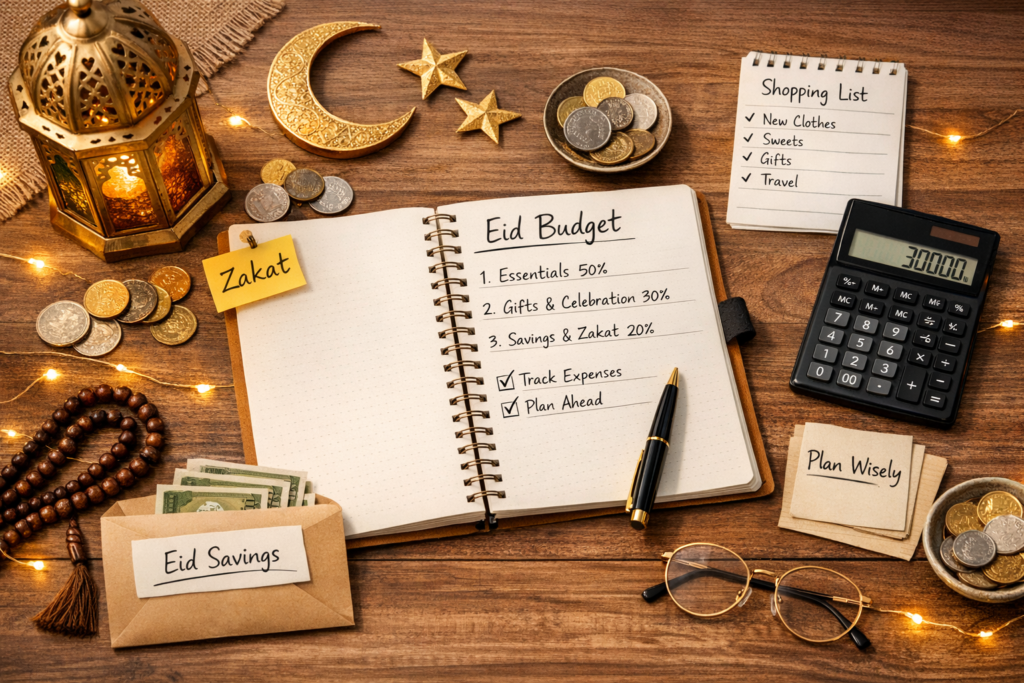
A useful guideline is the 50-30-20 budgeting rule.
• 50% Essentials – clothing, food, travel
• 30% Celebrations – gifts, decorations, outings
• 20% Charity and savings
For example, if your Eid budget is ৳30,000, the allocation could be:
• Essentials: ৳15,000
• Celebrations: ৳9,000
• Zakat and savings: ৳6,000
This structure ensures that spending remains balanced while maintaining generosity.
Step 2: Break the Budget into Clear Categories
Once the total budget is determined, dividing it into categories helps control spending.
Example breakdown:
| Category | Budget |
|---|---|
| Clothing | ৳8,000 |
| Food | ৳5,000 |
| Gifts | ৳7,000 |
| Zakat | ৳6,000 |
| Travel | ৳4,000 |
By assigning a specific amount to each category, you reduce the risk of overspending.
Step 3: Track Every Expense
Expense tracking may seem simple, but it is one of the most effective financial habits.
Tracking helps you stay aware of where your money is going.
You can track expenses using:
• budgeting apps
• Google Sheets
• a simple notebook
• a phone notes app
Some families involve children in tracking expenses to teach them financial responsibility and awareness.
Step 4: Avoid Prestige Spending
One of the biggest financial traps during Eid is trying to compete with others.
It is easy to believe that expensive clothes, large parties, or luxurious gifts are necessary for a joyful celebration.
But in reality, Eid happiness comes from connection, not consumption.
A simple gathering filled with laughter often creates more meaningful memories than extravagant spending.
Barakah comes from sincerity, not price.
Step 5: Plan for Post-Eid Financial Stability
Before finalizing your Eid spending plan, make sure your essential financial obligations remain secure.
These may include:
• rent or mortgage
• school fees
• groceries
• transportation costs
• emergency savings
Celebrating Eid should never create financial problems afterward.
Wise budgeting protects both present happiness and future stability.
💬 Real Stories of Budgeting for Eid
Real-life examples show how budgeting can improve Eid celebrations.
Raisa and Tanvir’s Story
Raisa and Tanvir, a young couple living in Dhaka, once struggled with overspending during Eid.
After experiencing financial stress one year, they decided to create a budget the following Ramadan.
They set a total Eid budget of ৳25,000 and planned every category in advance.
They purchased gifts early, prepared meals at home, and prioritized Zakat.
Because their spending was organized, they were able to save enough money for a small trip after Eid.
They later realized that planning did not reduce their joy—it increased their peace of mind.
Imran’s Eid Tradition
Imran, a single father, used to feel pressure to buy expensive toys for his son every Eid.
Eventually he decided to create a new tradition.
Instead of expensive gifts, they began cooking together and inviting neighbors for dinner.
The experience became their favorite Eid memory each year.
This shows that meaningful experiences often matter more than expensive purchases.
📊 Useful Tools for Eid Budget Planning
Visual planning tools can make budgeting easier and more engaging.
Some useful tools include:
Budget Wheel
A pie chart showing how your Eid spending is distributed across categories.
Zakat Tracker
A checklist that helps calculate and record charity contributions.
Gift Planner
A simple list of gift ideas, recipients, and estimated costs.
Family Event Calendar
A schedule for visits, meals, and gatherings during Eid.
These tools help families stay organized while making financial planning more enjoyable.
🕌 Planning Your Zakat Properly
Zakat is one of the pillars of Islam and an essential part of financial responsibility.
Planning Zakat properly ensures that charity is distributed accurately and effectively.
Basic Zakat Calculation
- Determine if your wealth meets the Nisab threshold.
- Calculate your total savings and assets.
- Subtract debts and liabilities.
- Pay 2.5% of eligible wealth.
Giving Zakat before Eid allows charities to distribute support to families who need it most.
This ensures that everyone can celebrate Eid with dignity.
✨ Creative Ways to Celebrate Eid on a Budget
A meaningful Eid celebration does not require large expenses.
Simple ideas can create joyful memories without financial pressure.
DIY Decorations
Create moon and star decorations using paper, lights, and simple craft materials.
Potluck Eid Gatherings
Invite guests to bring dishes so that everyone contributes to the meal.
Ramadan Reflection Nights
Share lessons and stories from Ramadan with family members.
Charity Projects with Children
Encourage children to donate toys, books, or clothes to those in need.
Personalized Eid Cards
Send thoughtful digital greetings to friends and relatives.
These activities often create stronger emotional connections than expensive celebrations.
📱 Helpful Apps for Managing Eid Budgets
Technology can simplify budgeting significantly.
Some helpful tools include:
• Goodbudget – envelope budgeting system
• Walnut – expense tracking
• Muslim Pro – includes Zakat reminders
• Google Sheets – customizable budgeting templates
Future financial platforms like Taka Pakhi aim to integrate budgeting tools, charity calculators, and financial planning features specifically designed for Muslim families.
🧠 Budgeting as a Form of Self-Care
Financial planning is not just about money. It is also about emotional well-being.
When people feel in control of their finances, they experience:
• reduced stress
• improved family communication
• stronger financial discipline
• better long-term stability
Budgeting allows families to focus on the true spirit of Eid—gratitude, generosity, and togetherness.
✅ Your Eid Budget Checklist
Before Eid arrives, review this checklist to ensure your finances are prepared.
✔ Set a total Eid budget
✔ Allocate spending categories
✔ Track expenses during Ramadan
✔ Calculate and prepare Zakat
✔ Plan gifts and Eidi
✔ Organize meals and travel plans
✔ Focus on meaningful experiences
✔ Reflect on spending after Eid
🌟 Conclusion: Celebrating Eid with True Barakah
Eid is a celebration of faith, generosity, and unity.
When spending is guided by thoughtful planning, every expense becomes meaningful. Gifts bring happiness, charity spreads compassion, and gatherings strengthen relationships.
Budgeting for Barakah does not mean spending less.
It means spending wisely, giving generously, and celebrating with intention.
By planning your Eid finances carefully, you ensure that the joy of Eid continues long after the celebrations end.
May your Eid be filled with happiness, peace, and abundant Barakah.